Misconception #5: Grace Is Carte Blanche to Sin
“Shall we continue in sin that grace may abound? Certainly not!” — Romans 6:1-2
The fifth misconception is that grace is carte blanche to sin. If the term is unfamiliar, “carte blanche” simply means having total freedom to do whatever you desire. And that is exactly how many people today view the grace of God — they reason, “Jesus died for us, so we can live however we want; God’s grace covers it.” But is that what grace actually is?
The misconception: grace is a license to sin
Here is something to be thankful for: the Word of God addresses this very error head-on. Paul anticipates it and rejects it in the strongest terms:
What shall we say then? Shall we continue in sin that grace may abound? Certainly not! How shall we who died to sin live any longer in it?
Romans 6:1-2 (NKJV)
Paul goes on to explain that we have been put to death with Christ and made alive to live a new life in Him. Yet people still go around saying that because of God’s great grace, they can continue in sin and grace will simply cover it and keep increasing. That, plainly stated, is a false grace message — and it is everywhere. Jude warns about exactly this:
For certain men have crept in unnoticed… ungodly men, who turn the grace of our God into lewdness and deny the only Lord God and our Lord Jesus Christ.
Jude 1:4 (NKJV)
This is the perversion of grace — twisting it into a license for immorality while denying the Lordship of Christ. As if grace meant you could pursue sexual relationships outside of marriage, do “a little” cheating, stealing, and lying, slander people, walk in unforgiveness, and treat anyone however you please — all under the banner of “God’s grace covers it.” It does not.
What grace actually does
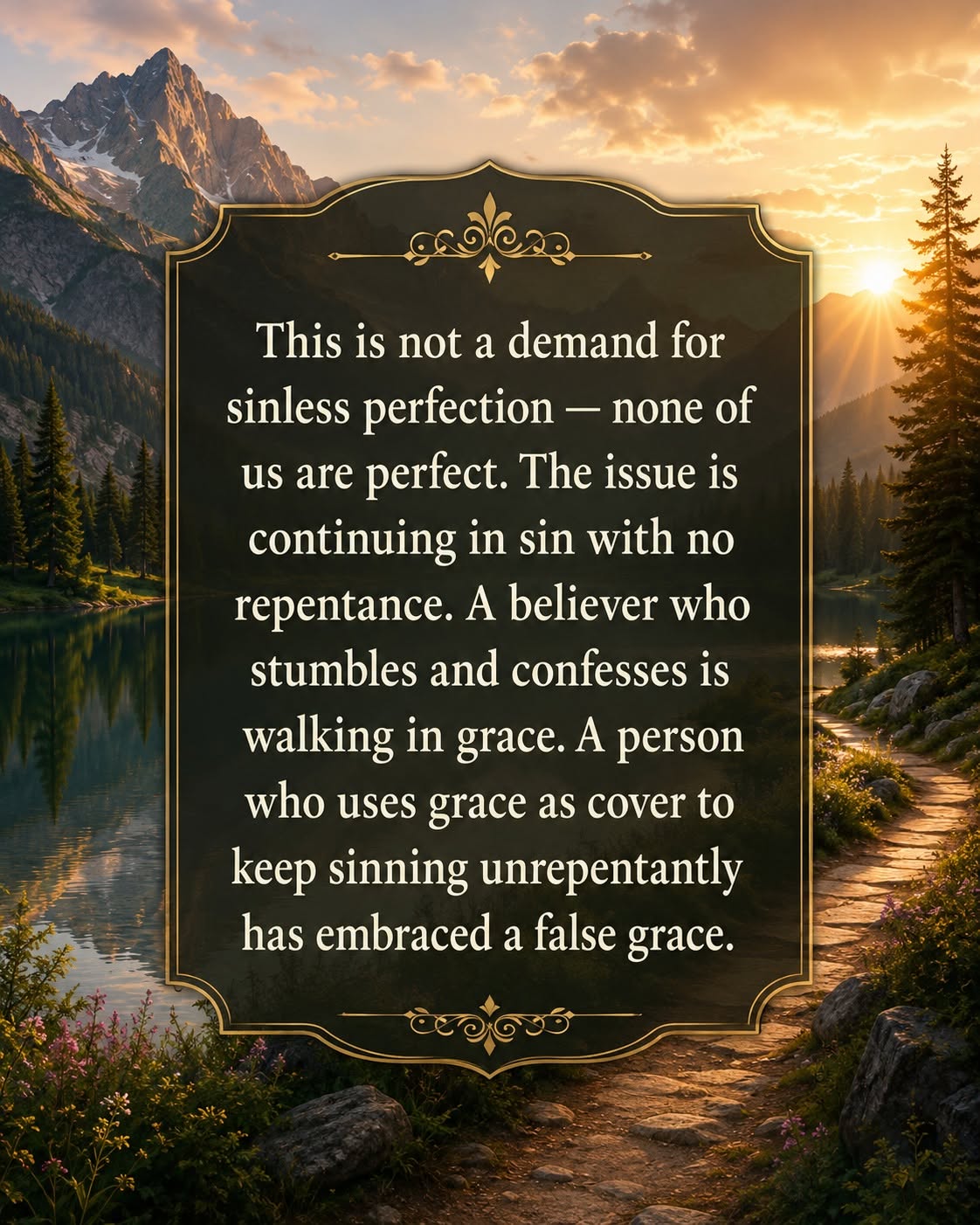
Real forgiveness has a condition attached, and that condition is confession and repentance:
If we confess our sins, He is faithful and just to forgive us our sins and to cleanse us from all unrighteousness.
1 John 1:9 (NKJV)
The crucial word there is if. We must confess our sins — and confess them as sin against a holy God, not as a harmless “mistake.” That is how grace actually operates. And when we let Scripture define grace, we find it is the very opposite of a license to sin:
For the grace of God that brings salvation has appeared to all men, teaching us that, denying ungodliness and worldly lusts, we should live soberly, righteously, and godly in the present age.
Titus 2:11-12 (NKJV)
Look at what grace does: it teaches us to say no to ungodliness and worldly passions, and to live self-controlled, upright, godly lives. It gives us power to look forward to the blessed hope, the appearing of our great God and Savior Jesus Christ. And it goes further still:
…who gave Himself for us, that He might redeem us from every lawless deed and purify for Himself His own special people, zealous for good works.
Titus 2:14 (NKJV)
Grace purifies a people and makes them zealous for good works. Far from licensing sin, God’s grace will always cry out in your heart: no to sin, and yes to Jesus Christ.
🎥 Watch the full message: Misconception #5 — Grace Is Carte Blanche to Sin
Part of the Misconceptions of the Faith series.
Keep reading

Eternal Judgment Happening Now
God's eternal judgment is not only a future event — Scripture says His wrath is being revealed now. Understanding this sobering truth equips the church to be God's prophetic voice, and to point people to the open door of grace.
Read more →
Misconception #3: Repentance Toward God Is Not Necessary for Salvation
Many in the church think the first step in evangelism is sharing Jesus. But Paul's pattern began earlier — with repentance toward God. Before a person can receive the Savior, they must first acknowledge God as God.
Read more →
Misconception #4: Love Is a Feeling
The world says love is a feeling — tolerance of everything, whatever makes us feel good. Scripture says love is a moral quality of God's own character, always grounded in truth and never rejoicing in sin.
Read more →